
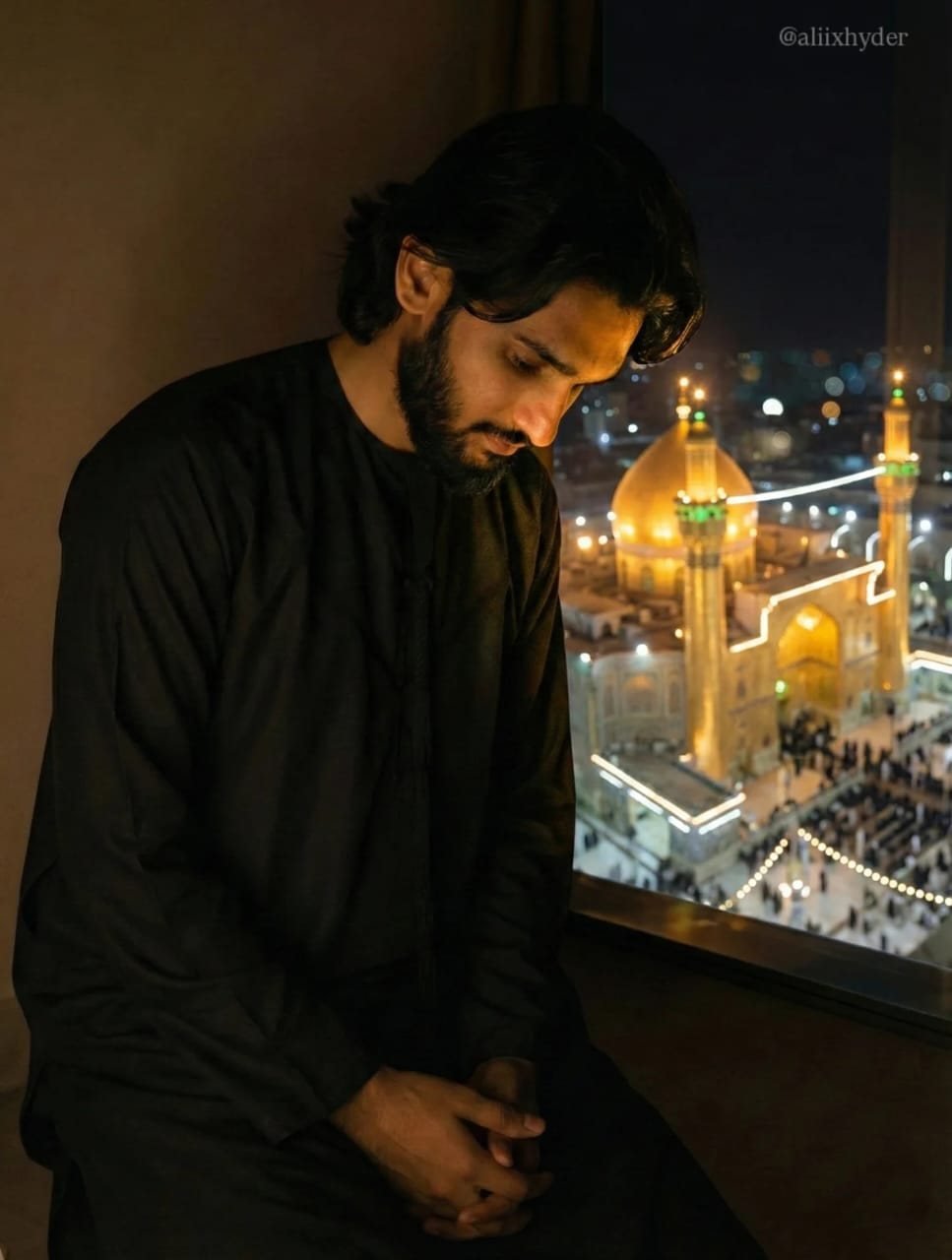
Some people inherit opportunities. Others spend their lives creating them.
Shaik Gaffar Ali, known professionally as Ali Hyder, is the 23-year-old founder and CEO of Zenovatez and the founder of Orbitz.USA. Born into a Muslim family in Palwancha, Telangana, India, on 27 July 2003, he went from a curious boy fascinated by computers to building two business ventures of his own. It is a story of ambition, perseverance, sacrifice, reinvention and faith.
Some people discover their purpose in a classroom. Others find it in the quiet corners of life, teaching themselves skills that nobody around them fully understands. Gaffar’s story belongs to the second kind, and it has never been a straight road. It has been a series of beginnings, disappointments, unexpected opportunities and difficult decisions.
Before building businesses, he experimented with technology. Before working with international clients, he taught himself digital skills. Before becoming a founder, he knew what it meant to hold a dream that others could not understand. And before returning to public life as Ali Hyder, he made a decision that changed the direction of his life.
Today he is building two distinct ventures with complementary missions: Zenovatez, a digital business development company, and Orbitz.USA, an international founder and entrepreneur community focused on visibility, connections, collaboration and growth.
But to understand the entrepreneur he is becoming, you first have to understand the boy he was.
Early life: Shaik Gaffar Ali’s childhood and family
Gaffar’s mother is Shaik Safoorah Zehra, and his elder sister is Shaik Waheeda Batool. His childhood began under difficult circumstances: his father left shortly after he was born, and his parents later divorced. His mother was left to raise her children and carry life’s responsibilities largely on her own.
Yet his story was never defined only by what was missing. It was shaped just as much by the people who stepped forward with love, stability and guidance.
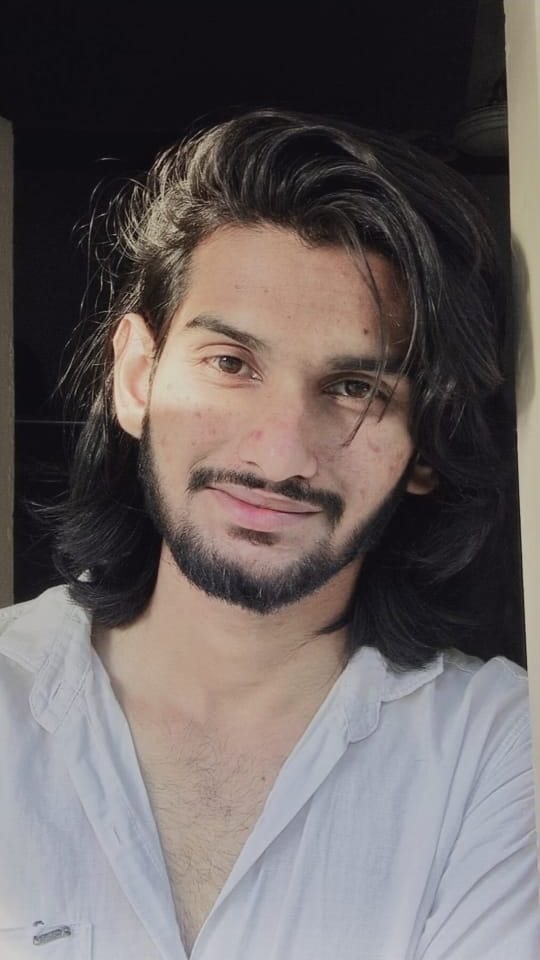
His maternal uncle, Shaik Yakub, played an especially important role. Alongside Gaffar’s mother and sister, he helped raise Gaffar as his own son, and that relationship became one of the most important foundations of his life. Shaik Yakub was an accomplished educator, with a background in botany and zoology, postgraduate studies and teacher-training qualifications. He worked as a college lecturer and NEET faculty member, and within the family he was known for his intelligence, religious commitment, discipline, generosity and readiness to help others.
Gaffar’s sister also went on to postgraduate studies in zoology. In this household, education was taken seriously and achievement was encouraged.
Gaffar’s interests, though, reached beyond the classroom. From an early age he was fascinated by technology, computers, mobile phones and the possibilities of the digital world. He could become completely absorbed in a subject, and rather than spend all his free time socialising, he preferred to observe, experiment, read and learn on his own. When something caught his interest, he wanted to understand it, master it and eventually create something with it.
That curiosity would become one of his greatest professional strengths.
A mother who kept working through her health challenges
His mother was a skilled and hardworking woman. She painted sarees and dresses, worked in tailoring and women’s clothing, ran a home-based clothing business, and over the years taught tailoring to around a thousand students.
Health problems and four operations eventually forced her to scale back, after doctors advised her against strenuous work. It made stability and education even more important to the family, and with Shaik Yakub’s support, they continued to look after one another.
For young Gaffar, growing up around people who kept working through difficulty was an early lesson: life does not always offer ideal circumstances, but you can still move forward through responsibility, patience and determination. His path would look very different from theirs, but their influence stayed part of his foundation.
The dream of becoming an Indian Army officer
As a child, Gaffar wanted to join the Indian Army. He was drawn to the idea of becoming a highly trained officer, with a special interest in the Para Special Forces and the discipline of elite military service.
To him it was much more than a career. He admired the commitment, courage, endurance and mental strength of military life, and imagined becoming someone who could face hard situations without giving up.
At the same time, his interest in technology kept growing. He was academically ambitious, took pride in grasping subjects quickly, and did not need someone beside him explaining every step. If he saw something being done, he wanted to learn how it worked. That habit of observing, practising and improving would matter enormously once he found his way to computers.
His first dream was military service. Life would gradually introduce him to a different kind of mission: building his own future through technology and entrepreneurship.
At eleven, a first opportunity in technology
In 2014, when Gaffar was about eleven, an older-brother figure named Siraj opened an internet shop near his home. For many children it would have been just another shop in the neighbourhood. For Gaffar, it became an informal classroom.
After school he began visiting regularly. At first he said little. He watched Siraj operate the computers, search the internet and print documents, coming back day after day and mentally following every step.
Eventually Siraj noticed and asked whether he knew how to use a computer. Gaffar confidently said yes, and when given the chance, he proved it: typing documents, Google searches, printing, creating PDFs and desktop-publishing work.
Siraj encouraged him and introduced him to data entry, typing and other practical skills. Gaffar picked up many of these tasks within three or four days of focused practice. Impressed, Siraj eventually handed him the shop keys, and for the next two or three months Gaffar handled much of the shop’s day-to-day work on his own.
He was still a child, but he was already learning skills many people only meet much later in life.
A different kind of student
When the shop was quiet, Gaffar did not spend his time on entertainment. He searched YouTube for lessons on video editing, content creation and technical skills, then went home and practised on his mother’s phone, learning through experimentation rather than formal instruction.
His family, however, wanted him to concentrate on school. Worried the shop and his digital experiments would distract him from his studies, they eventually insisted he stop visiting regularly and return the keys to Siraj.
It was a hard moment. He had found something he genuinely loved, but the people responsible for his future did not yet see what he saw. They wanted a secure educational path; he wanted to explore a world that was only beginning to open up. For a while, he kept learning quietly.
An opportunity does not always arrive as a formal offer. Sometimes, it begins with simply paying attention.
First steps as a content creator, and starting over
Losing the shop did not end his interest in digital creation. He kept making videos on his mother’s phone, experimenting with recording, editing and publishing on social media.
When TikTok became popular in India, he created an account under the nickname “Ghani”, a name he was known by at home. His videos began attracting viewers and followers, and for the first time he felt what it was like to make something people far beyond his own surroundings appreciated.

His family remained concerned about the time he spent on social media. They wanted him to finish his education and doubted that content creation could offer a dependable future. More than once they found out, confronted him and insisted he stop. Eventually the account was deleted, even though it had built a following of nearly 100,000.
Watching that progress disappear was deeply painful. Then came another setback: in 2020, TikTok was banned in India.
For some people, that would have been the end of the story. Gaffar kept learning. The platform was gone, but the skills remained: video editing, audience engagement, visual presentation, and the discipline to produce content consistently. Instead of treating the loss as proof he should give up, he started looking for the next opportunity.
Learning without a classroom
Through online resources and constant practice, he became increasingly skilled in graphic design and video editing, then expanded into website development, WordPress, social media marketing and Google Analytics, along with the practical tools businesses use to build and manage an online presence.
His method was simple: learn something, practise it, find what is missing, and keep improving. With Siraj’s permission, he later borrowed a spare laptop so he could keep learning at home.
What began as curiosity about a single computer had grown into a broader understanding of the digital economy. By his early teens, he could see a future in which his skills might become a source of income.
The comeback: mr_ghani_07 on MX TakaTak and Moj
His next big opportunity came through India’s new short-video platforms. After trying Josh and other apps, he turned to MX TakaTak and started uploading again.
This time, something remarkable happened. One of his first videos there drew around 1.4 million views, and within five days he had roughly 40,000 followers. Soon afterwards, Moj approached him too.
It proved his earlier efforts had not been wasted. He had lost his first account, but not the creative instincts and technical ability needed to build an audience again. He joined Moj as mr_ghani_07, with the hashtag #ghanifam, and his content soon reached hundreds of thousands of viewers. In about two months, he built an audience of around 160,000 followers.

For a young creator once told that social media had no real future, it was a major achievement.

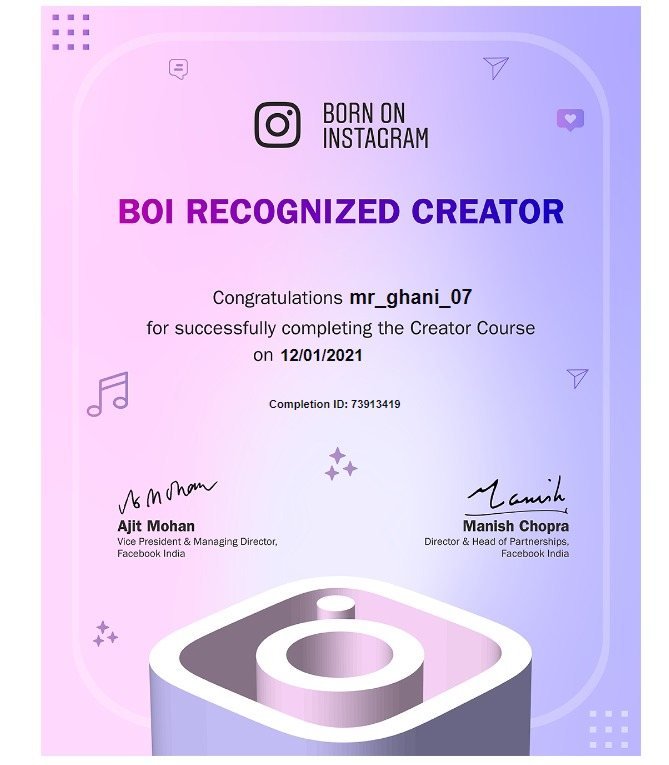
From creator to Moj ambassador
As his account grew, he connected with Ashwin, a Moj manager based in Mumbai, who guided him on improving his videos, sharpening his content strategy and building his presence. Moj sent him creator hampers, and those deliveries became a visible sign of progress that his family began to notice.
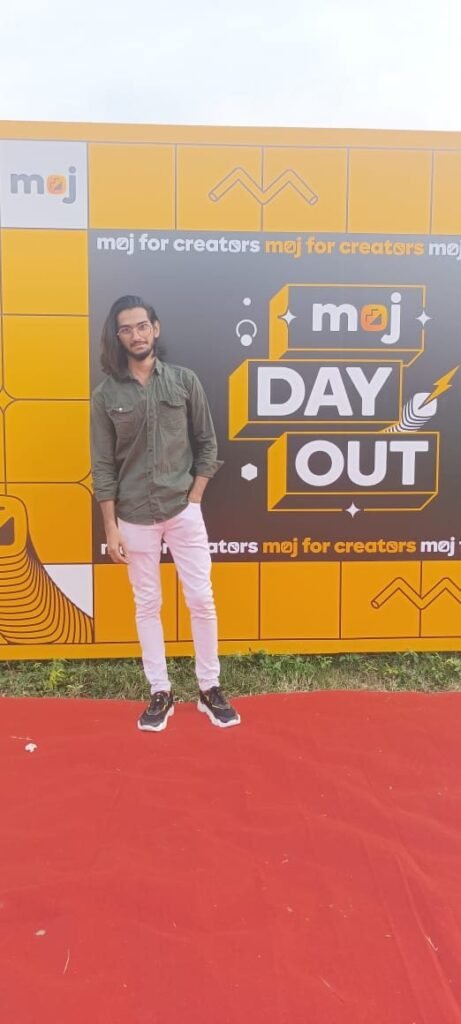
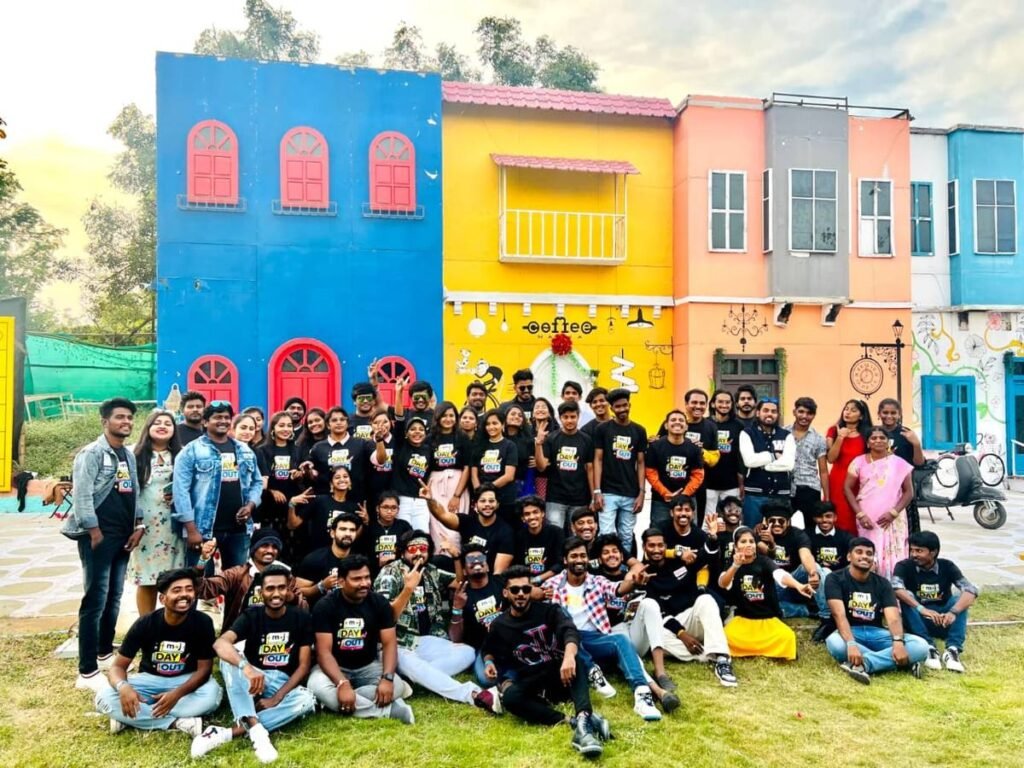
His growing recognition led to an ambassador role with Moj for Telangana and Andhra Pradesh. He helped bring other creators onto the platform, working with the management team on onboarding, and some of those creators went on to earn from their content.
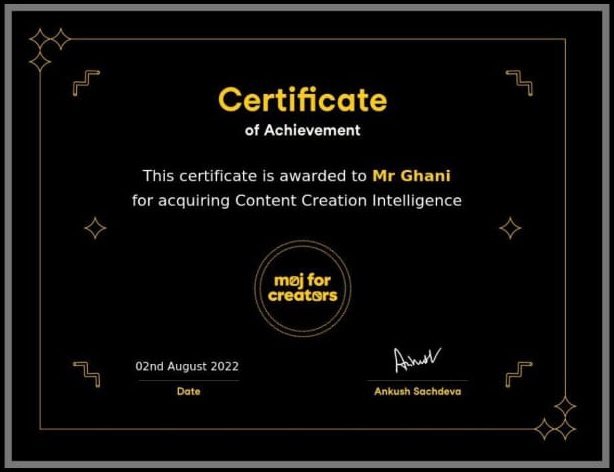
His digital presence also brought promotional and brand opportunities, earnings that were substantial for his age, and interest from the entertainment industry, including Bollywood-related offers.
His family began to see his ambitions differently. The same young person once discouraged from making videos was now earning recognition, opportunities and income from it, and they became supportive, even helping him get a new phone for his work.
It brought him an important realisation: skills developed independently can become valuable when the right opportunity appears. It also raised a new question.
Was content creation the destination of his journey, or was it preparing him for something bigger?
Choosing faith and a new purpose
After finishing twelfth grade, Gaffar faced a major decision. His family expected him to study for a degree. He was looking beyond his hometown, especially at Mumbai, where his connections with creators and people in the entertainment industry could take his content career further.
His family did not agree with the move. They wanted him closer to home and in formal education. A compromise emerged: his uncle suggested he sit an entrance examination and take up a college place if he won a free seat.
Gaffar agreed, while thinking carefully about the kind of environment where he could study and still build his own direction. He secured a free seat at a college in Hyderabad affiliated with Osmania University and moved to the city.

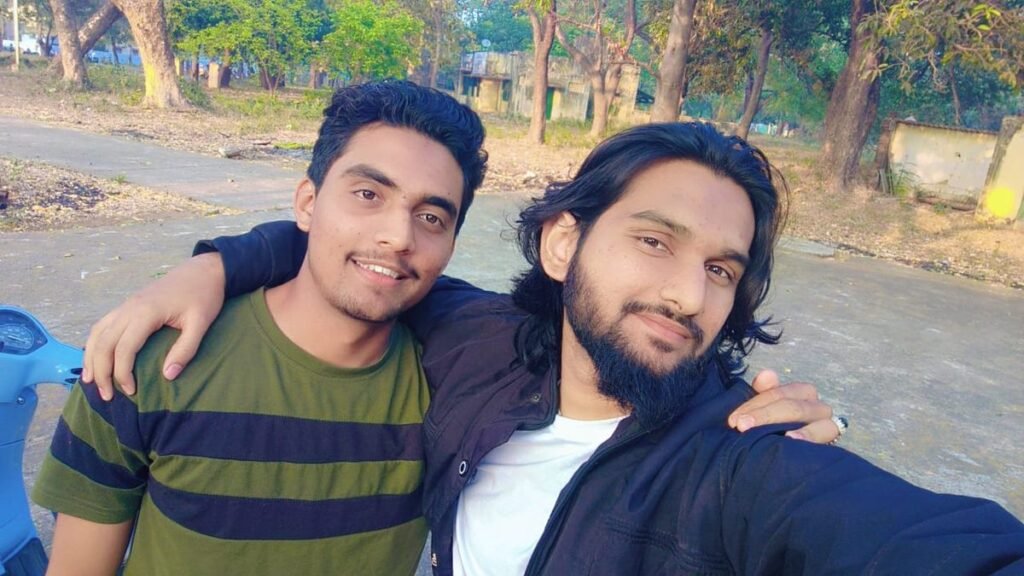
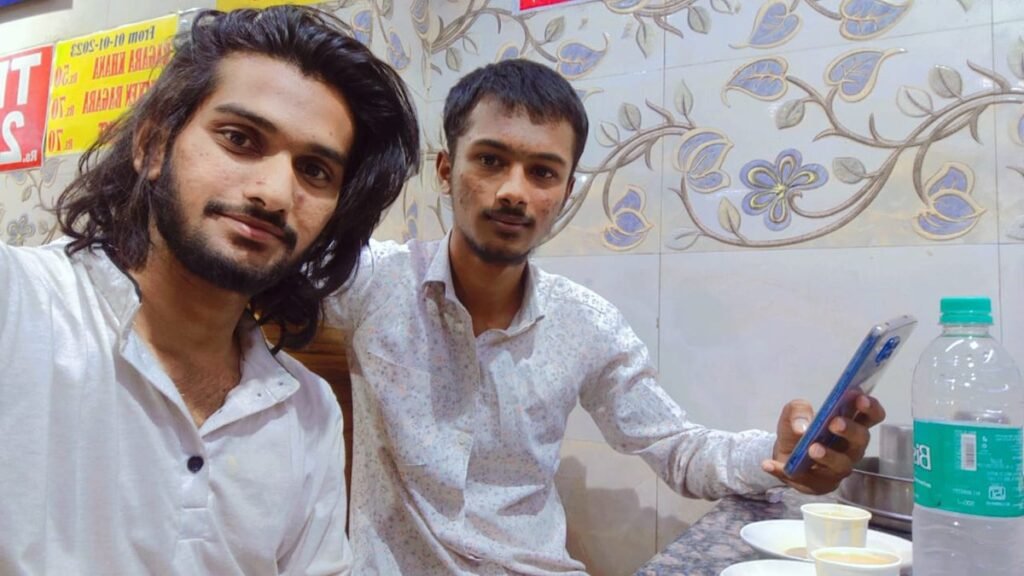
Hyderabad was a new beginning. He arranged shared accommodation instead of a conventional hostel routine and learned to manage life independently: cooking, organising his responsibilities and adapting to a much larger city. But his most important transformation was still ahead.
Walking away from the identity he had built
During this period, Gaffar wrestled with the direction of his content career. He had spent years building an audience, a recognisable identity and a large library of videos, and he had tasted the rewards of digital recognition.
Yet his religious convictions were becoming central to how he wanted to live and earn. He reassessed his work and decided to focus on a livelihood he believed was consistent with halal earnings and Islamic values.
In 2022, he stepped away from his public creator identity. He removed around 3,800 videos from his accounts and effectively disappeared from the platforms where he had once been recognised.
To an outsider, it might have looked inexplicable. Why walk away from an audience, recognition and income after working so hard for them? For Gaffar, the answer was personal. He wanted his livelihood to reflect his values, and he believed success should not be measured only by followers, views, recognition or money.
The decision did not erase what he had learned. His experience in content creation, editing, audience development and digital platforms stayed with him. He was not starting again with nothing. He was carrying years of experience into a new chapter.
Sometimes, the most difficult form of ambition is not pursuing everything you can achieve. It is deciding which achievements are worth pursuing.
From freelancer to founder of Zenovatez and Orbitz.USA
After stepping away from his creator identity, Gaffar began looking for clients who could benefit from his technical and creative skills, reaching out to potential customers and offering his digital services.
Today, Shaik Gaffar Ali builds two ventures of his own: Zenovatez, a digital business development company, and Orbitz.USA, The United Success Alliance, an international founder and entrepreneur community focused on visibility, connections, collaboration and growth.
The boy who once learned by quietly watching in a neighbourhood internet shop now leads businesses of his own, carried by the same curiosity, resilience and faith that brought him this far.
Frequently asked questions about Shaik Gaffar Ali
Who is Shaik Gaffar Ali?
Shaik Gaffar Ali is an entrepreneur from Palwancha, Telangana, India, born on 27 July 2003. He is the founder and CEO of Zenovatez and the founder of Orbitz.USA, and works as a digital business strategist, entrepreneur and coach.
Who is Ali Hyder?
Ali Hyder is the professional name of Shaik Gaffar Ali, the founder of Zenovatez and Orbitz.USA.
What is Zenovatez?
Zenovatez is a digital business development company. Shaik Gaffar Ali is its founder and CEO.
What is Orbitz.USA?
Orbitz.USA, The United Success Alliance, is an international founder and entrepreneur community focused on visibility, connections, collaboration and growth. It was founded by Shaik Gaffar Ali.
Where is Shaik Gaffar Ali from?
He is from Palwancha, Telangana, India. After finishing twelfth grade, he moved to Hyderabad for college.
How old is Shaik Gaffar Ali?
Shaik Gaffar Ali was born on 27 July 2003, so he is 23 years old.
Was Shaik Gaffar Ali a Moj creator?
Yes. As mr_ghani_07 (#ghanifam), he built an audience of around 160,000 followers on Moj in about two months, and later served as a Moj ambassador for Telangana and Andhra Pradesh, helping onboard other creators.
Why did Shaik Gaffar Ali quit content creation?
In 2022 he stepped away for personal and religious reasons: he wanted his livelihood to be consistent with halal earnings and Islamic values. He removed around 3,800 videos and focused on building a digital business career.
Who raised Shaik Gaffar Ali?
His mother, Shaik Safoorah Zehra, raised him together with his elder sister, Shaik Waheeda Batool, and his maternal uncle, Shaik Yakub, a college lecturer and NEET faculty member who raised him as his own son.